
Beyond the Post: The Evolution from Medial Posts to GuideRails in Stability Running Shoes

Beyond the Post: The Evolution from Medial Posts to GuideRails in Stability Running Shoes

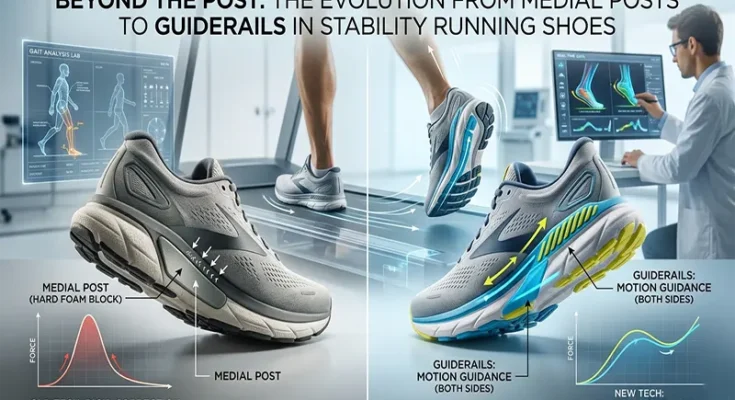
For decades, the running shoe industry spoke one primary language when it came to stability: “Correct the pronation.” If a runner’s foot rolled inward excessively, the solution was straightforward—place a physical barrier in their way. Today, however, the industry has shifted toward a more sophisticated dialogue: “Guide the motion.”

The transition from traditional medial posts to modern systems like GuideRails or stabilizing frames represents a fundamental shift in how we think about the kinetic chain. For runners who have spent years in rigid, corrective footwear, understanding this evolution is key to finding a shoe that feels less like a medical device and more like a high-performance tool.

The Traditional Approach: The Medial Post

For much of the last forty years, the medial post was the gold standard of stability. It is easy to identify: if you look at the arch side of a traditional stability shoe, you will often see …

Beyond the Post: The Evolution from Medial Posts to GuideRails in Stability Running Shoes READ MORE
The Foundation of Stability: Best Running Shoes for Severe Overpronation and Flat Feet

The Foundation of Stability: Best Running Shoes for Severe Overpronation and Flat Feet

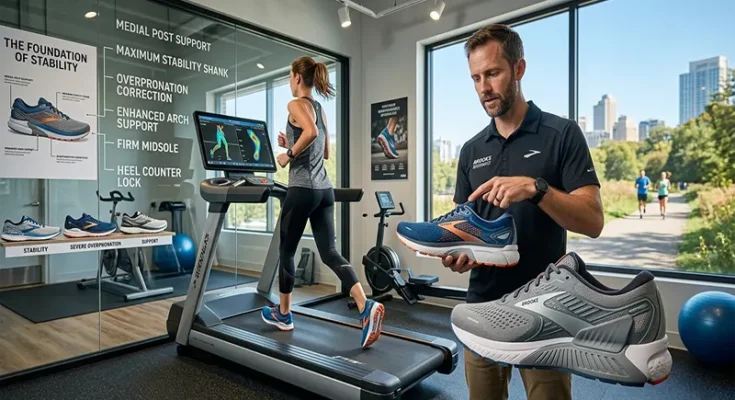
For runners with flat arches and severe overpronation, the running shoe is more than just a piece of equipment—it is the structural scaffolding for their entire kinetic chain. When your arches “pancake” upon impact and your feet roll excessively inward (overpronation), it creates a chain reaction of misalignment that travels from your ankles up to your knees, hips, and lower back.

Finding the right shoe is not about “limiting” your foot; it is about providing a foundation that allows you to move efficiently and pain-free. Here is how to identify the stability features you need and which models are currently leading the category.

The Biomechanics of Stability

When you have severe overpronation, a neutral running shoe—which is designed to flex and move naturally—will likely collapse under your weight. To counteract this, you need a shoe engineered to control that inward roll.

Key Stability Mechanisms

  • Integrated Guide Rails: Unlike old-school stability
The Foundation of Stability: Best Running Shoes for Severe Overpronation and Flat Feet READ MORE
The Precision Fit: How to Choose Running Shoes for Wide Feet and High Arches

The Precision Fit: How to Choose Running Shoes for Wide Feet and High Arches

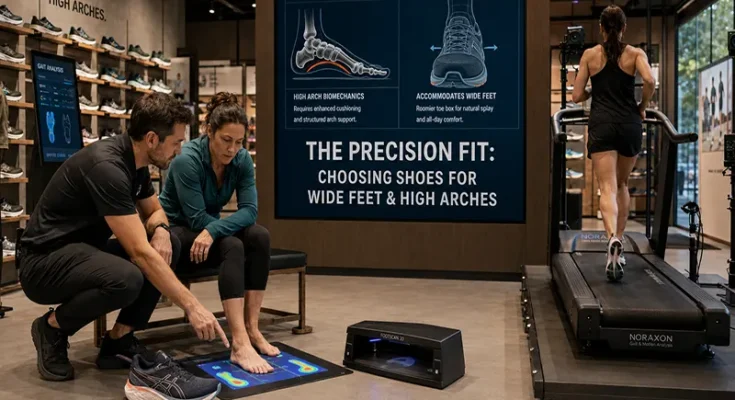
For many runners, the pursuit of a “perfect” shoe feels like a compromise. If you have wide feet and high arches, you are likely familiar with the “fit gap”: shoes that are wide enough often lack the structural integrity for your arches, while shoes with the right arch support frequently pinch your metatarsals.

Finding the right footwear when you have these specific anatomical traits isn’t just about comfort; it is about injury prevention. High arches and wide feet create a unique biomechanical profile that requires a thoughtful, strategic approach to shopping. Here is your guide to navigating the market to find a shoe that truly fits.

Understanding Your Anatomy: Why the “Double Challenge” Matters

To choose the right shoe, you must first understand how your feet interact with the ground.

  • The High-Arch Biomechanics (Supination): High arches are typically rigid. Unlike a flat foot, which collapses (pronates) to absorb impact, a
The Precision Fit: How to Choose Running Shoes for Wide Feet and High Arches READ MORE
The Great Divide: Understanding the Difference Between Carbon-Plated Racing Shoes and Daily Trainers

The Great Divide: Understanding the Difference Between Carbon-Plated Racing Shoes and Daily Trainers

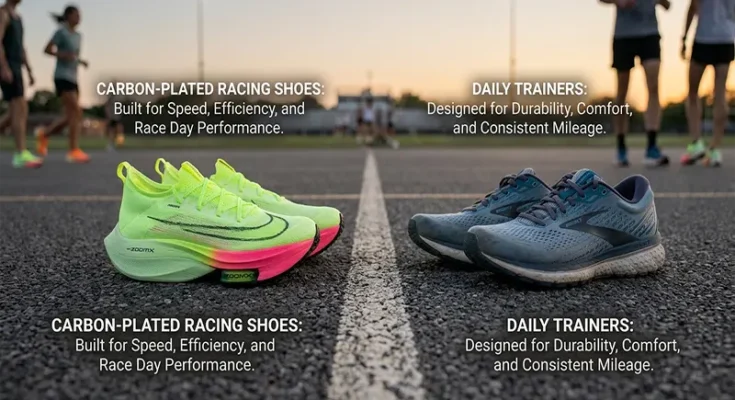
In the era of the “super shoe,” the running world has been transformed by a technological revolution that promises—and delivers—faster times and improved efficiency. But as these high-tech tools become more accessible, many runners are left wondering: do I need a carbon-plated shoe for every run, or should I stick to my trusty workhorses?

Understanding the biomechanical and functional differences between carbon-plated racers and daily trainers is essential for maintaining both your performance and your long-term health.

The Technology Breakdown: What Makes a “Super Shoe”?

The performance leap seen in modern racing shoes, such as the Nike Vaporfly or Adidas Adios Pro series, is the result of a “synergistic effect” between three core components:

  • Carbon-Fiber Plates: Unlike traditional, flexible midsoles, carbon plates are stiff and often curved (rockered). They act as a mechanical lever, reducing the work required by the foot and ankle joints during the “toe-off” phase of your
The Great Divide: Understanding the Difference Between Carbon-Plated Racing Shoes and Daily Trainers READ MORE
How to Choose the Best Running Shoes for Bad Knees and Joint Pain

How to Choose the Best Running Shoes for Bad Knees and Joint Pain

Running is one of the most rewarding ways to stay fit, but for many, it comes with a frustrating companion: knee and joint pain. Whether you’re dealing with the sharp ache of runner’s knee or the lingering discomfort of joint inflammation, the impact of each stride can feel like a direct hit to your knees.

While there is no “magic bullet” shoe that eliminates all pain, your footwear is your primary interface with the ground. Choosing the right pair can fundamentally alter the forces traveling up your legs. Here is how to navigate the technical world of running shoes to find the support your joints deserve.

The Mechanics of Pain: Why Footwear Matters

When you run, your body absorbs impact forces roughly three to four times your body weight. If your shoes lack the proper shock absorption or if they don’t accommodate your unique gait, that energy doesn’t just disappear—it …

How to Choose the Best Running Shoes for Bad Knees and Joint Pain READ MORE