
In an age where the sheer volume of information—and clothing—can be overwhelming, “fashion fatigue” has become a common modern ailment. We stand before packed closets feeling like we have nothing to wear, or we find ourselves endlessly scrolling through online stores, buying items that never truly integrate into our existing wardrobe.
Enter the Generative AI Personal Stylist. This isn’t just about automated shopping; it is about leveraging advanced machine learning to curate a life of intentionality. By using AI as your digital closet manager, you can transition from chaotic consumption to a streamlined, sustainable capsule wardrobe that feels uniquely yours.
The AI Advantage: Data-Driven Elegance
Why is an AI stylist superior to a traditional magazine or a static style blog? The answer lies in personalization at scale.
Unlike a generic style guide, an AI stylist analyzes your specific data—the clothes you already own, your color preferences, your body type, and your professional needs. It acts as a neutral, data-driven bridge between the trends you see online and the reality of your daily life, helping you identify exactly what you need while discouraging impulsive purchases that don’t fit your “style ecosystem.”
Building Your Capsule: The AI Workflow
1. Inventory and Audit
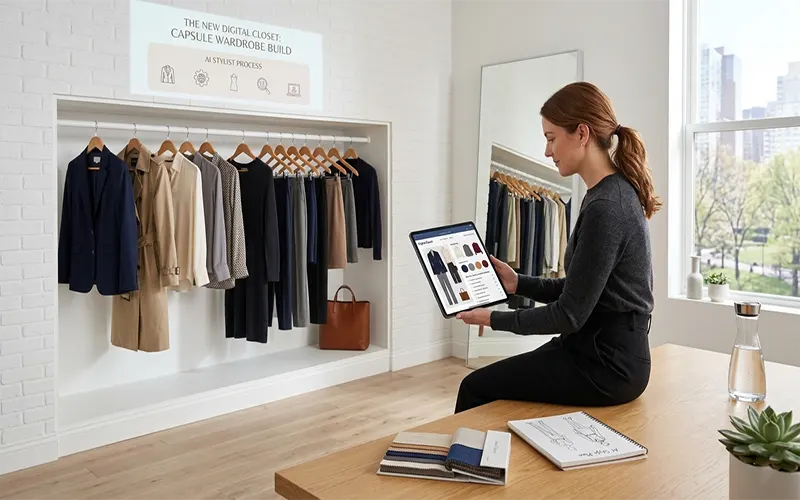
The first step in building a capsule is knowing your current foundation. Use your smartphone to take photos of your key pieces—blazers, trousers, shirts, and shoes. Upload these images into an AI assistant capable of vision (like Gemini or ChatGPT-4o).
- The Prompt: “I am uploading photos of 20 pieces from my closet. Act as a professional stylist. Please categorize these by season, formality, and style. Identify my ‘core’ color palette based on these items.”
2. Prompt Engineering Your ‘Core Aesthetic’
Once the AI understands your inventory, define your vision. Use descriptive language to steer the AI toward a cohesive style.
- The Prompt: “Given my closet inventory, help me define my signature style. I want to achieve a ‘Minimalist Professional’ aesthetic. Suggest a 15-piece capsule wardrobe that includes 5 items I already own and 10 items I should look for to bridge the gaps.”
3. Bridging the Gaps
This is where the AI becomes a money-saver. Instead of buying everything new, the AI can cross-reference your inventory to tell you exactly which “bridge pieces” will unlock the most outfit combinations. It transforms your closet into a system, where every new addition is required to pair with at least three existing items.
The ‘Digital Fitting Room’
Generative AI allows you to visualize outfits before you ever spend a dime. If you are debating a purchase, you can use generative image tools to see how a new item might look with your existing pieces.
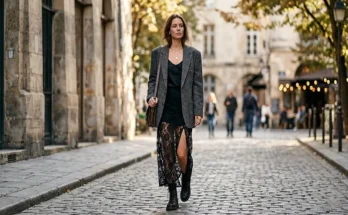
- The Workflow: Upload a photo of your favorite oversized blazer and a photo of a new lace midi skirt you are considering. Ask the AI: “Visualize these two items worn together. What kind of footwear and accessories would elevate this look to a professional business-casual setting?”
Three ‘Prompt Recipes’ for Your Capsule
To get you started, try these specific prompts with your AI assistant:
Recipe 1: The ‘Gap Analysis’
“I have 5 blazers, 3 pairs of trousers, and 4 shirts in my wardrobe. I want to build a business-casual capsule wardrobe for the 2026 summer season. Analyze these categories and tell me the top 3 pieces I am missing that would provide the most outfit versatility.”
Recipe 2: The ‘Style Refinement’
“I want to move toward a ‘Poet Core’ aesthetic while keeping my professional wardrobe intact. Based on my existing inventory, how can I incorporate small, inexpensive accessories (scarves, belts, vintage jewelry) to shift my vibe without needing a full wardrobe overhaul?”
Recipe 3: The ‘Packing Minimalist’
“I have a 5-day business trip coming up. I am bringing [List Items]. Create a daily outfit itinerary using only these items that works for both daytime meetings and evening dinners.”
The Human-in-the-Loop: Why AI is a Tool, Not a Master
While AI is exceptionally good at organizing and analyzing, it does not understand comfort. Fashion is tactile; it is how you feel when you move, the weight of the fabric, and the confidence you derive from a perfect fit.
The most successful capsule wardrobes are a collaboration: use AI to handle the logistics, the color theory, and the gap analysis, but keep the final decision in your own hands. Treat the AI as your Chief of Staff—it provides the recommendations and the data, but you remain the Creative Director of your own style.
Final Thoughts: Toward Sustainable Style
Using AI to build a capsule wardrobe is ultimately an act of sustainability. When you know exactly what you own, exactly what you need, and exactly how to style every piece you bring into your home, you break the cycle of “fast fashion” waste. You are no longer just building a wardrobe; you are curating a toolset for your professional and personal life. In the future of fashion, the most stylish people won’t necessarily be the ones with the most clothes—they will be the ones with the most clarity.